
Featured Speakers, Panelists and Round Table Participants
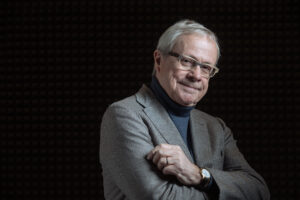 David Allen is one of the world’s most influential thinkers on personal and organizational productivity, David Allen’s 35 years of experience as a management consultant and executive coach have earned him worldwide recognition. He was a coach, colleague and friend to John Edwin Mroz for four decades. Allen’s pioneering research and coaching of corporate managers and CEOs for some of America’s most prestigious corporations and institutions have earned him Forbe’s recognition as one of the top five executive coaches in the U.S. and Business 2.0 magazine’s inclusion in their 2006 list of the “50 Who Matter Now.” Allen is the engineer of GTD®, the popular Getting Things Done® methodology that has shown millions how to transform a fast-paced, overwhelming, overcommitted life into one that is balanced, integrated, relaxed and has more successful outcomes. His GTD methodology is taught by training companies in more than 90 countries and his bestselling book, the groundbreaking “Getting Things Done: The Art of Stress-Free Productivity,” has sold millions and been published in thirty languages. Time Magazine called it the “definitive business self-help book of the decade.” Other works include: Ready for Anything: 52 Productivity Principles for Work and Life; and Making It All Work: Winning at the Game of Work and the Business of Life.
 Randa Fahmy is internationally recognized for her work in global government affairs, energy policy and national security, Randa Fahmy has more than 30 years of legal and public policy experience, including service in the executive and legislative branches of the United States Government. Presently, Randa is president of Fahmy Hudome International (FHI), a strategic consulting firm, which provides critical advice and counsel to international and domestic clientele with an interest in international business transactions, global government affairs and energy policy. Previously, she was appointed by President George W. Bush as the U.S. associate deputy secretary of energy, served as counselor to United States Senator Spencer Abraham (R-MI), and practiced as an attorney with the law firm of Willkie, Farr and Gallagher. Fahmy’s opinions on international diplomacy and energy policy have been published in the Wall Street Journal and New York Times, and she appears frequently as an analyst on energy and national security issues on NBC, MSNBC, Fox News, CNN and BBC. Fahmy received her J.D. from Georgetown University Law Center and her B.A. summa cum laude from Wilkes University. She has served on several boards including: The United States Secretary of Energy Advisory Board, St. Jude Children’s Research Hospital ALSAC Professional Advisory Board, Wilkes University Board of Trustees and DirectWomen Board Institute. She served on the United States Department of State Advisory Committee on International Economic Policy, as chair of the Maryland Commission for Women and the Maryland Governor’s Commission on Middle Eastern American Affairs.
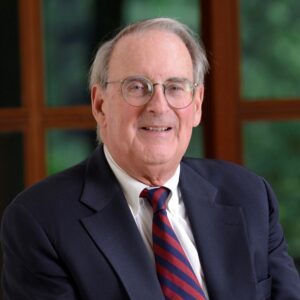 Jonathan F. Fanton, Ph.D., served as president of the American Academy of Arts & Sciences from 2014 to 2019. As president of the American Academy, Fanton directed one of the nation’s oldest honorary societies and independent policy research centers. Founded in 1780, the Academy convenes leaders from academia, business, and government to address present and future challenges for the nation and the world. His previous experience includes serving as interim director of the Roosevelt House Public Policy Institute at Hunter College from 2009 to 2014. From 1999 to 2009, Fanton was president of The John D. and Catherine T. MacArthur Foundation and for 17 years was president of The New School for Social Research. Earlier, he was vice president of Planning at The University of Chicago. Fanton has served as board chair for several organizations, including Human Rights Watch, the Security Council Report and the New York State Commission on Independent Colleges and Universities. He currently serves on the boards of Scholars at Risk, the Asican Cultural Council and the Benjamin Franklin House. He chairs the advisory board of the Newman’s Own Foundation. Fanton holds a Ph.D. in American history from Yale University, where he taught and was special assistant to President Kingman Brewster. He is the author of “Foundations and Civil Society,” volumes I and II (2008), and “The University and Civil Society,” volumes I and II (1995, 2002).
 Brian Finlay is president and Chief Executive Officer of the Stimson Center. Under his tenure, Stimson has transformed its business model with pioneering new engagements across Asia and industry-defining programming on environmental security, renewable energy and technology. The Center also opened its first overseas office in Europe. Since 2016, the Center has tripled in size and continues to outperform similarly sized institutions in global rankings. Notably, Stimson boasts the most diverse and inclusive workforce of any major Washington think tank. Finlay previously served as vice president, managing director and senior fellow at Stimson. Prior to joining the Center, he served as executive director of a Washington-based lobbying initiative focused on counterterrorism issues, a researcher at the Brookings Institution and a program officer at the Century Foundation. Prior to emigrating to the United States from his native Canada, Finlay served with the Public Health Agency and the Department of Foreign Affairs and International Trade. Finlay serves as chairman emeritus of the Board of Directors of iMMAP, an information management and data analytics organization focused on improving humanitarian relief and development coordination. Finlay taught as an adjunct professor at American University and currently sits on the Editorial Board of Global Security, a journal of health, science and policy. With expertise in nonproliferation, transnational crime, counter-trafficking and supply chain security, Finlay holds an M.A. from the Norman Patterson School of International Affairs at Carleton University, a graduate diploma from the School of Advanced International Studies, the Johns Hopkins University and an honors B.A. from Western University in Canada.
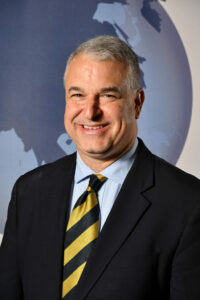 David J. Firestein is the inaugural president and CEO of the George H. W. Bush Foundation for U.S.-China Relations (Bush China Foundation) and a founding and current member of the Foundation’s Board of Directors. Prior to joining the Bush China Foundation, Firestein was the founding executive director of The University of Texas at Austin’s (UT) China Public Policy Center (CPPC) and a clinical professor at UT’s Lyndon B. Johnson School of Public Affairs. Before moving to UT, Firestein served as senior vice president and Perot Fellow at EastWest Institute, where he led the Institute’s Track 2 diplomacy work in the areas of U.S.-China relations, East Asian security and U.S.-Russia relations. A decorated career U.S. diplomat from 1992–2010, Firestein specialized primarily in U.S.-China relations. Among the honors he garnered during his diplomatic career were the Secretary of State’s Award for Public Outreach (2006) and the Linguist of the Year Award (1997). Toward the end of his State Department career, Firestein served as an elected member of the Board of Governors of the American Foreign Service Association (AFSA), the union and professional association of the United States Foreign Service.
 Marshall Goldsmith, Ph.D., a New York Times and Wall Street Journal bestselling author, has written or edited 43 books, which have sold more than 2.5 million copies, been translated into 32 languages and become listed bestsellers in 12 countries. Goldsmith’s Triggers and What Got You Here Won’t Get You There, placed on Amazon’s “100 Best Leadership & Success Books Ever Written.” His other bestsellers include: MOJO, Succession: Are You Ready?, The Leader of the Future and How Women Rise (with lead author, Sally Helgesen). Goldsmith’s professional acknowledgements include: Global Gurus – Corps D ’Elite Award for Lifetime Contribution in both Leadership and Coaching, Economist – top 10 executive educators, Harvard Business Review – World’s #1 Leadership Thinker, Harvard Institute of Coaching – inaugural winner of the Lifetime Award for Leadership, Institute for Management Studies – Lifetime Achievement Award for Leadership Education, American Management Association – 50 great thinkers who have influenced the field of management and BusinessWeek – 50 great leaders in America. Goldsmith is a member of the Thinkers 50 Hall of Fame, a #1 Executive Coach and the only two-time Thinkers 50 #1 Leadership Thinker in the World. He is featured in the New Yorker profile, “The Better Boss” and the documentary movie, “The Earned Life”. Goldsmith served as a professor of management practice at the Dartmouth Tuck School of Business. His Ph.D. is from the UCLA Anderson School of Management, where he was Distinguished Alumnus of the Year. His MBA is from Indiana University Kelley School of Business, where he was the Distinguished Entrepreneur of the Year. He is one of a select few executive coaches who has worked with more than 200 major CEOs and their management teams. He served on the Advisory Board of the Peter Drucker Foundation for ten years. He has been a volunteer teacher for U.S. Army Generals, Navy Admirals, Girl Scout executives and leaders of the International and American Red Cross, where he was a National Volunteer of the Year. Goldsmith has more than 1.3 million followers on LinkedIn and more than three million views on YouTube. Hundreds of his articles, interviews, columns and videos are available (at no charge) online at www.MarshallGoldsmith.com. People from around the world have viewed, read, listened to, downloaded or shared his resources tens of millions of times.
 Rose Gottemoeller is the Steven C. Házy Lecturer at Stanford University’s Freeman Spogli Institute for International Studies and its Center for International Security and Cooperation. Before joining Stanford, Gottemoeller was the deputy secretary general of NATO from 2016 to 2019, where she helped to drive forward NATO’s adaptation to new security challenges in Europe and in the fight against terrorism. Prior to NATO, she served for nearly five years as the under secretary for Arms Control and International Security at the U.S. Department of State, advising the Secretary of State on arms control, nonproliferation and political-military affairs. While assistant secretary of state for Arms Control, Verification and Compliance in 2009 and 2010, she was the chief U.S. negotiator of the New Strategic Arms Reduction Treaty (New START) with the Russian Federation.
 Stephen B. Heintz is president and CEO of the Rockefeller Brothers Fund (RBF), a family foundation with an endowment of approximately $1.5 billion that advances social change for a more just, sustainable, and peaceful world. Before joining the RBF in 2001, Heintz co-founded and served as president of Dēmos, a public policy organization that works to reduce political and economic inequality and broaden citizen engagement in American democracy. In 2018, he was named a co-chair of a national Commission on the Practice of Democratic Citizenship in the 21st Century by the Academy of Arts and Sciences and co-authored the commission’s report, Our Common Purpose: Reinventing American Democracy for the 21st Century. Heintz served as executive vice president and CEO of the EastWest Institute during the 1990s. Based in Prague, he helped propel civil society development, economic reform and international security as the bedrock of Central and Eastern Europe’s burgeoning democracies. In 2002, he led the RBF’s joint initiative with the UN Association of the USA to open a Track II dialogue that helped lay the groundwork for the Iran nuclear deal. In 2007, Heintz convened a meeting of the Kosovo Unity Team and prominent diplomatic figures, resulting in the Pocantico Declaration that set a path for the Kosovo independence process. Heintz is a fellow of the American Academy of Arts and Sciences and a member of the Council on Foreign Relations and of the China Council for International Cooperation on Environment and Development. He serves on the boards of the Quincy Institute, the David Rockefeller Fund and the Rockefeller Archive Center. He is the recipient of the Council on Foundations 2018 Distinguished Service Award.
 John Izzo, Ph.D., has pioneered creative successful businesses and emerging work trends for more than 25 years. He is the bestselling author of nine books including the international bestsellers Awakening Corporate Soul, Values Shift-The New Work Ethic , The Five Secrets You Must Discover Before You Die, The Five Thieves of Happiness, and Stepping Up. Izzo’s passion in helping organizations activate purpose with employees and customers inspired him to write The Purpose Revolution: How Leaders Create Engagement and Competitive Advantage in an Age of Social Good, in 2018. A second edition of Stepping Up was released in 2020. Over the last twenty years Izzo has spoken to more than one million people, taught at three major universities, advised more than 500 organizations and is frequently featured in the media by Fast Company, PBS, CBC, the Wall Street Journal, CNN and INC Magazine. He has advised some of the most successful companies in the world on activating purpose including DuPont, TELUS, Manulife, McDonald’s, SAPA, RBC, Lockheed Martin, Qantas Airlines, Humana, Microsoft and the Mayo Clinic. Izzo was a pioneer in the corporate social responsibility and sustainability movements and is an adjunct professor at the University of British Columbia where he is a co-founder of Blueprint, which enhances the well-being of men and communities. He also serves on the Advisory Board of Sustainable Brands. Izzo holds two master’s degrees in theology and psychology and a Ph.D. in communication.
 Tim Johnson, Ph.D., was appointed dean of the School of Languages, Cultures, and World Affairs in 2018, after serving as interim dean the previous two years. Prior to his appointment as dean, Johnson served as professor and chair of the Department of Classics, a position he held since coming to the College of Charleston in 2011. Before joining the College, he was a member of the faculty at Truman State University, Baylor University and the University of Florida. He holds a doctoral degree in classical philology from the University of Illinois and also studied at the University of Kentucky and the University of Pennsylvania. A specialist in Classical lyric poetry, his research is centered on the relationship between literature, politics and community. He has authored award-winning books on the Roman lyricist Horace, A Symposion of Praise: Horace Returns to Lyric in Odes IV (University of Wisconsin Press) and Horace’s Iambic Criticism (Mnemosyne Series, Brill), which have established him as a leading international voice in Horatian studies. Along with scholarly journal articles on poets of the Augustan period, Johnson has been a member of editorial boards for Classical Journal and Bryn Mawr Classical Review, and served as editor for a special issue on Homer for Classical World and for the Religious Studies Review, publishing more than 900 book reviews. Johnson has studied internationally at the Vatican Library and lived in Rome.
 Sarah Koellner, Ph.D., is an assistant professor in the Department of German and Russian Studies at the College of Charleston. She has published on issues relating to identity, migration, privacy and surveillance in the works of Juli Zeh, Angela Richter, Hasan M. Elahi, Tomer Gardi, Idrissou Mora-Kpai, Birgit Kempker and Aléa Torik in journals such as Seminar, Gegenwartsliteratur, Variations, and Surveillance & Society. Besides working on artistic evaluations of contemporary mass surveillance, she works in the areas of migration studies and digital humanities. Her current book project, Participatory Privacy in Contemporary German Culture, investigates the challenges posed to traditional notions of privacy in the face of mass surveillance, predictive analytics and a digital sharing culture in the twentieth and twenty-first century. Koellner argues that notions of privacy have not disappeared or atrophied as a result, but rather adapted to the new cultural, legal and political contexts of the digital age. Through the lens of selected literary, filmic and theatrical works by Ulrich Peltzer, Juli Zeh, Sybille Berg, Angela Richter, Hasan M. Elahi, and Hito Steyerl, the volume examines contemporary discourses on collaborative decision-making processes, the embracing of counter-surveillance techniques and the creation of digital movements. Koellner holds a Ph.D. from Vanderbilt University in German Studies with a specialization in twenty-first century German literature and culture and her M.A. from Johannes Gutenberg-University in Mainz, Germany.
 Max Kovalov, Ph.D., is an instructor of international studies and Bennett director of the John Edwin Mroz Global Leadership Institute at the College of Charleston. Kovalov is a political scientist, and he teaches courses on democratization, European studies, Eastern European politics and society, populism and global governance. He has directed the College of Charleston’s Model UN program since 2014. His research focuses on democratization, politics of memory, populism and electoral integrity in post-Communist states. His recent publications include “When Lenin becomes Lennon: Decommunization and the Politics of Memory in Ukraine” (forthcoming in Europe-Asia Studies), Electoral Manipulations and Fraud in Parliamentary Elections: The Case of Ukraine” (East European Politics and Societies) and “The Armed Conflict in Eastern Ukraine: Exploring Competing Narratives” (The Copernicus Journal of Political Studies). Kovalov’s current research projects are on populism and democratic quality in Poland and the impact of political outsiders on democracy in the comparative perspective. As the director of the Mroz Global Leadership Institute, Kovalov is responsible for the institute’s programming, such as the World Affairs Colloquium Series, and professional development programs for students, such as the Global Ambassadors Program. Kovalov holds a Ph.D. in political science from the University of Oklahoma and a master’s degree in International Studies from Oklahoma State University. In 2002-2004 he was a recipient of the Edmund Muskie graduate fellowship awarded by the U.S. State Department.
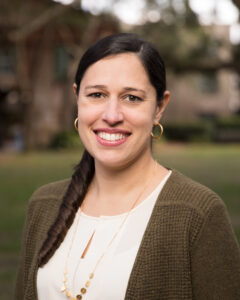 Amy Malek, PH.D., is an Assistant Professor of International Studies at the College of Charleston, and formerly an Associate Research Scholar at The Sharmin and Bijan Mossavar-Rahmani Center for Iran and Persian Gulf Studies at Princeton University. Amy is well-known as a sociocultural anthropologist specializing in the intersections of migration, citizenship, and culture in the Iranian diaspora. Her research and teaching interests include migration studies, diaspora and transnationalism, memory, and visual culture, with an emphasis on Iranian and Middle Eastern communities in North America and Europe. Her current book project is a transnational ethnography of the impacts of cultural policies on diasporic Iranian communities in Sweden, Canada, and the United States. She has incorporated her research in essays and in consultations or appearances for media outlets such as ABC Nightline, BBC World News, L.A. Times, AJ+, and Le Monde M.
 Briana McGinnis, PH.D., is an Assistant Professor in the Department of Political Science at the College of Charleston. She holds a Ph.D. in government from Georgetown University. Her research centers on political theory and public law, with a special focus on citizenship and belonging. Dr. McGinnis’ work explores patterns of inclusion and exclusion in liberal democratic political communities touching on related issues including immigration, shared identity, and punishment. She is especially interested in how the law and legal forms are used to enact political decisions about membership. Before joining the faculty at the College she was Postdoctoral Fellow (2017-2018) in the Department of Political Science, University of Wisconsin, Postdoctoral Fellow, Research Group on Constitutional Studies (2015-2017) in the Department of Political Science at McGill, and a University Research Fellow, Georgetown University School of Foreign Service in Qatar (2012-2013). Her most recent work includes: “Beyond Disenfranchisement: Collateral Consequences and Equal Citizenship” (Politics, Groups, and Identities) and Exile in America: Political Expulsion and Liberal Citizenship (Journal of Politics).
 Bruce McConnell is a distinguished fellow with the Stimson Center and has served on the Stimson Board of Directors since 2021. He has been a leading player on global cyberspace peace and security issues at the intersection of governments, business and civil society for more than 30 years. As the former and last president and CEO of the EastWest Institute (EWI), McConnell led the migration of the institute’s work to other nonprofit organizations. Prior to becoming president, McConnell led EWI’s Global Cooperation in Cyberspace program, working with governments and companies to increase the safety, security and stability of life in cyberspace. He also co-led the secretariat of the Global Commission on the Stability of Cyberspace. From 2009 to 2013, McConnell was deputy under secretary for cybersecurity at the U.S. Department of Homeland Security, and he served on the Obama-Biden Presidential Transition Team. From 2000 to 2008, he created, built and sold two consultancies that provided strategic advice to clients in technology, business and government markets. In 1999 and 2000, McConnell led the United Nations- and the World Bank-sponsored International Y2K Cooperation Center. From 1986 to 1999, he was chief of information policy and technology in the Office of Information and Regulatory Affairs at the White House Office of Management and Budget. McConnell holds an M.P.A. from the Evans School for Public Policy at the University of Washington and a B.S. from Stanford University. He serves as a distinguished fellow at Observer Research Foundation America and as a member of the advisory committee of the Fuxi Institution (China). He is a business advisor to several technology companies and is currently working on a novel about climate change.
 Karen Linehan Mroz’s career includes both nonprofit and for-profit experience in business, education and philanthropy, with a primary focus on education and women’s empowerment in the Middle East. As president of the Middle East Children’s Institute (MECI), she developed programs in the West Bank and established an education program for Syrian refugees and Jordanian underprivileged children in Jordan. MECI operated unique comprehensive community programs that included children’s education, women’s empowerment and entrepreneurship, as well as community development. Prior to MECI, Mroz was the founding executive director of Friends of UNRWA-USA, a national non-profit established to raise public awareness about and private funds for more than five million Palestine refugees. She spent considerable time in refugee camps and UNRWA facilities for Palestine refugees in Gaza, the West Bank, Syria, Lebanon and Jordan. She served as a program officer with The Goldman Sachs Foundation, the Institute of International Education, and was elected a member and vice chairperson of a public board of education in Massachusetts focusing her efforts on special education initiatives. At Sachs, she was responsible for the development of the Goldman Sachs Global Leaders Program (GSGLP). Since 1980, Mroz participated in the creation and development of the EastWest Institute (EWI) with her late husband, John Edwin Mroz, EWI’s co-founder and CEO. Since 2014 she has been a member of EWI’s Board of Directors and Executive Committee. Today she serves on the Steering Committee for the John Edwin Mroz Global Leadership Institute and the Advisory Board for the School of Languages, Cultures and World Affairs, both at the College of Charleston.
 Anneleen Roggeman is senior program manager for the Cyberspace Cooperation Initiative at the Observer Research Foundation America (ORF America). In this role, Roggeman is responsible for strategy, implementation and management of the Cyberspace Cooperation Initiative, including coordination of program activities, convening of high-level meetings, strategic communications, partnerships and budget management. Prior to joining ORF America, Roggeman was senior program associate at the EastWest Institute (EWI), an international NGO focused on conflict resolution and addressing global security issues by building trust, convening dialogue and mobilizing global networks. She was responsible for the management and coordination of the cyberspace initiative, including EWI’s Global Cyberspace Cooperation Summits. In this capacity, she was also part of the Secretariat of the Global Commission on the Stability of Cyberspace, launched in 2017 to promote and develop proposals for norms and policies to enhance international cyber stability.
 Emily Whalen, Ph.D., is a historian of U.S. foreign policy and of the modern Middle East. She earned her Ph.D. in history at the University of Texas – Austin in 2020. She has been an Ernest May Fellow at Harvard Kennedy School’s Belfer Center for Science and International Affairs, a Smith Richardson Foundation Predoctoral Fellow at Yale’s International Security Studies Program and an affiliated scholar at the American University of Beirut’s Center for Arab and Middle Eastern Studies. This year, Whalen is a post-doctoral fellow at the Clements Center for National Security. Whalen served as a consultant for the EastWest Institute from 2015 to 2020. She wrote a book manuscript that tells the story of EWI: A Better World: John Edwin Mroz and the EastWest Institute in World History, 1980-2020. Her writing appears in several publications, including Foreign Policy, Task and Purpose and Lawfare.
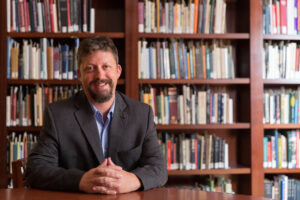 John White has served as the dean of libraries at the College of Charleston since 2014. The Libraries include the region’s premier research library, the Marlene and Nathan Addlestone Library; Special Collections; and the Grice Marine Library, the John Rivers Communication Museum and the Avery Research Center for African American History and Culture. White has been with the Addlestone Library since 2001. He has served as an archivist, department head and associate dean. He has been the principal investigator on more than a dozen state, federal and private foundation grants. These grants have funded important archival processing projects, the digitization of historic records held by the College of Charleston and its partners, and the founding of the Race and Social Justice Initiative following the tragedy at Mother Emanuel A.M.E. Church in downtown Charleston. White is the author of a number of works on Southern history and politics, including “Race, Grass Roots Activism and the Evolution of the Republican Party in South Carolina, 1952–1974,” in Glenn Feldman’s Painting Dixie Red: When, Where, Why, and How the South Became Republican (University of Florida Press, 2011) and “The White Citizens’ Councils of Orangeburg County, South Carolina” in Winfred B. Moore and O. Vernon Burton’s Toward The Meeting of the Waters: Journeys in the History of the Civil Rights Movement in South Carolina, 1901–2003 (University of South Carolina Press, 2008). White earned his B.A. in political science from Bridgewater College, his M.A. in history from the College of Charleston and his Ph.D. in history from the University of Florida.
 Damon Wilson is president and CEO of the National Endowment for Democracy (NED), an independent, nonprofit, grant-making foundation supporting freedom around the world. Prior to joining the Endowment, he helped transform the Atlantic Council into a leading global think tank as its executive vice president. Previously, Wilson served as special assistant to President George W. Bush and Senior Director for European Affairs at the National Security Council. Wilson also served at the U.S. Embassy in Baghdad, Iraq, as the executive secretary and chief of staff, where he helped manage one of the largest U.S. embassies during a time of conflict. Prior to this posting, from 2004 to 2006, he worked at the National Security Council as director for Central, Eastern and Northern European Affairs, helping to enlarge NATO to partner with Germany and support a democratic Ukraine. Prior to serving in Brussels, Wilson worked in the Department of State’s Office of European Security and Political Affairs, on the State Department’s China desk and at the U.S. Embassy in Beijing. Wilson completed his Master’s degree at the Princeton School of Public and International Affairs, during which he interned in the African Affairs Directorate of the National Security Council. He has been decorated by leaders of Bulgaria, Estonia, Georgia, Hungary, Latvia, Moldova, Poland and the Slovak Republic for his efforts to advance transatlantic relations, and by the living governors of South Carolina for his contribution to the state.